
JPasswordField – Java Swing – Example
In this tutorial, we are going to see an example of JPasswordField in Java Swing. JPasswordField is part of javax.swing package. JPasswordField class is a specialized text component for password entry. It allows the edition of a single line of text. JPasswordField inherits from the JTextField class in javax.swing package.
JPasswordField constructors class:
| JPasswordField() | Constructor that creates a new Password field. |
| JPasswordField(int n) | Constructor that creates a new empty Password field with a specified number of columns. |
| JPasswordField(String Password) | Constructor that creates a new empty Password field initialized with the given string. |
| JPasswordField(String Password, int n) | Constructor that creates a new empty Password field with the given string and a specified number of columns. |
| JPasswordField(Document d, String Password, int n) | Constructor that creates a Password field that uses the given text storage model and the given number of columns. |
Commonly used methods:
- getPassword(): returns the text in JPasswordField.
- getText(): returns the text in JPasswordField.
- getEchoChar(): returns the character used for Echo in JPasswordField.
- setEchoChar(char c): set the Echo character for JPasswordField.
Example of JPasswordField in Java Swing:
import javax.swing.*;
import java.awt.event.*;

public class Main
{
  public static void main(String[] args)
  {
    JFrame frame = new JFrame();

    final JPasswordField password = new JPasswordField();
    password.setBounds(120, 70, 150, 30);

    JLabel label1 = new JLabel("Username:");
    label1.setBounds(15, 20, 100, 30);

    JLabel label2 = new JLabel("Password:");
    label2.setBounds(15, 70, 100, 30);

    JButton btn = new JButton("Login");
    btn.setBounds(100, 130, 110, 30);

    final JTextField tf = new JTextField();
    tf.setBounds(120, 20, 150, 30);

    frame.add(password);
    frame.add(label1);
    frame.add(label2);
    frame.add(btn);
    frame.add(tf);

    frame.setSize(300,230);
    frame.setLayout(null);
    frame.setVisible(true);

    btn.addActionListener(new ActionListener()
    {
      public void actionPerformed(ActionEvent e)
      {
        System.out.println("Username : "+ tf.getText());
        System.out.println("Password: "+ new String(password.getPassword()));
      }
    });
  }
}
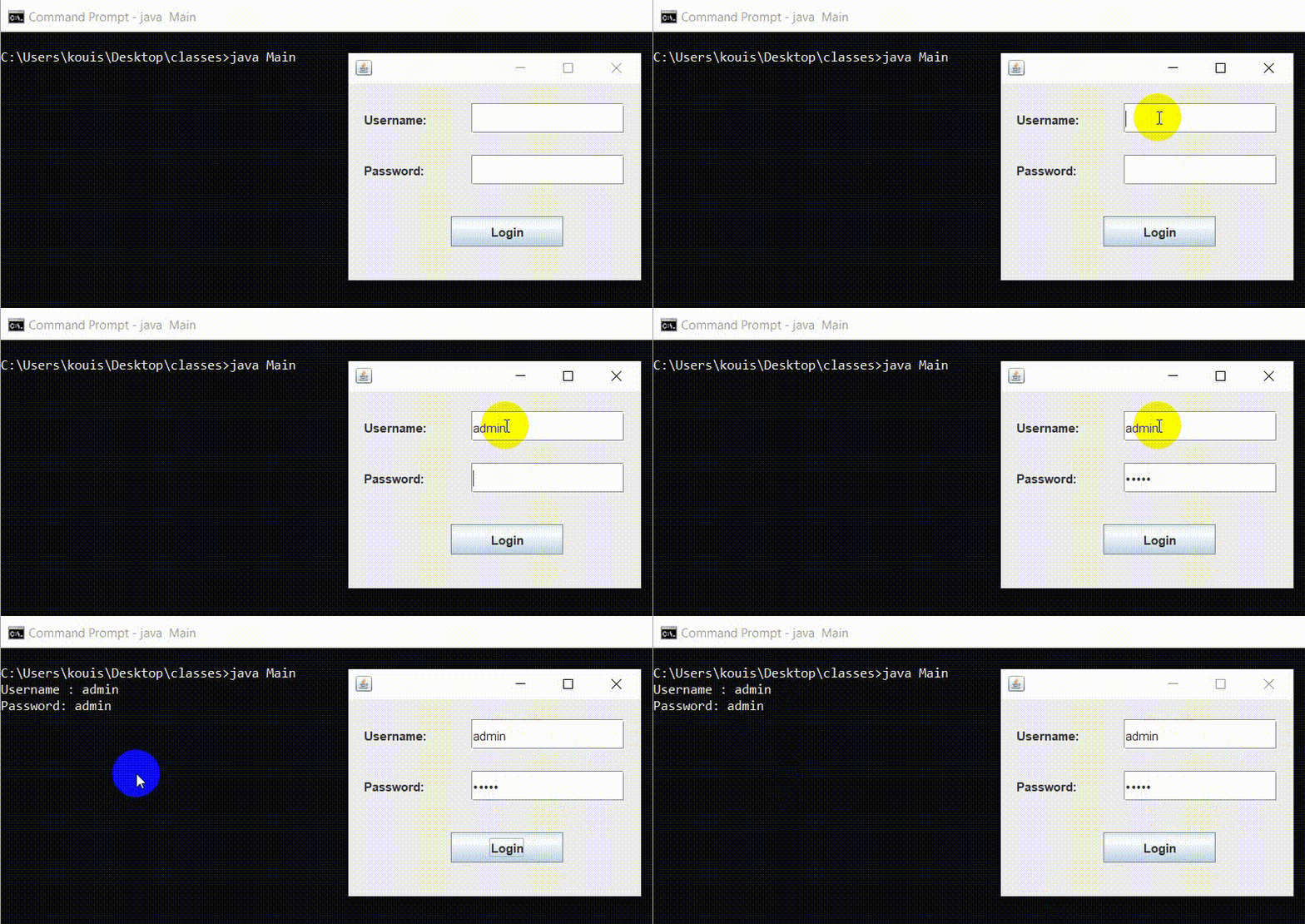
Output: